| Indian
Tours |
|
| National Park |
 |
|
|
| Indian Wildlife |
|
| Others |
|
More.. |
|
 |
 |
|
 Keoladeo Ghana
National Park at Bharatpur in Rajasthan is
acknowledged as one of the most outstanding wetland
reserves in Asia and during the winter months the
network of shallow marshes within the National Park,
replenished by monsoon rains during the summer,
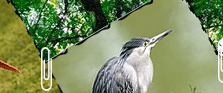
provide refuge for thousands of waterfowl, herons,
storks, cranes and waders. This compact oasis of
water in the midst of a mostly agricultural
landscape is a magnet for birds and it is possible
to see over a hundred species in a stay of just a
few days. Only a few hours drive from Agra, the
reserve has long been a favourite with Naturetrek
clients but surprisingly our programme has never
included a holiday based exclusively at Bharatpur, a
deficiency we have now rectified with a new 9 day
tour which allows participants the luxury of 5 full
days to savour the ornithological treasures of this
remarkable place. With Agra so close we could not
overlook the unique cultural attractions of the Taj
Mahal and Fatehpur Sikri so the tour concludes by
visiting these man-made wonders which ideally
complement the natural history riches of Bharatpur. Keoladeo Ghana
National Park at Bharatpur in Rajasthan is
acknowledged as one of the most outstanding wetland
reserves in Asia and during the winter months the
network of shallow marshes within the National Park,
replenished by monsoon rains during the summer,
provide refuge for thousands of waterfowl, herons,
storks, cranes and waders. This compact oasis of
water in the midst of a mostly agricultural
landscape is a magnet for birds and it is possible
to see over a hundred species in a stay of just a
few days. Only a few hours drive from Agra, the
reserve has long been a favourite with Naturetrek
clients but surprisingly our programme has never
included a holiday based exclusively at Bharatpur, a
deficiency we have now rectified with a new 9 day
tour which allows participants the luxury of 5 full
days to savour the ornithological treasures of this
remarkable place. With Agra so close we could not
overlook the unique cultural attractions of the Taj
Mahal and Fatehpur Sikri so the tour concludes by
visiting these man-made wonders which ideally
complement the natural history riches of Bharatpur.
|
|
DAY 1
Arrive Delhi International airport, receive upon
arrival and straight drive to hotel. Night stay at
Delhi.
|
|
DAY 2
DELHI – BHARATPUR
Those impatient to sample the new avifauna can join
an excursion to the Yamuna River at Okhla, one of
the best birdwatching sites in urban Delhi. Here on
the exposed mud flats we can expect to see a variety
of waterbirds and waders including Little Cormorant,
Brown-headed Gull, Black-bellied Tern, Pond Heron,
Red-wattled Lapwing, Black-winged Stilt, Avocet,
White-breasted Kingfisher and many other
characteristic Indian species. Great clouds of Black
Kites wheel over the city in the afternoon thermals
and various other raptors drift across the sky
although sadly the once abundant White-backed
Vultures are now very scarce following a mysterious
viral disease which has severely depleted their
numbers. Passerines around the Okla barrage might
include several shrike species, Citrine Wagtails,
Paddyfield Pipits, mynas and possibly a few warblers
in the bushes. Okhla is a fine place to gain an
introduction to the Indian avifauna and may even
provide a few rarer surprises or perhaps the very
local White-tailed Stonechat and Striated Babbler,
two Gangetic specialities. Later we take a four-hour
drive to Bharatpur for the stay of six nights in a
hotel just outside the reserve.
|
|
DAY 3-7
BHARATPUR
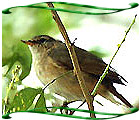 Keoladeo Ghana National Park at Bharatpur is
arguably the finest bird sanctuary in the world.
Formerly a shooting preserve of the Rajput
Maharajahs of Bharatpur, it is just 29 sq. km. in
extent but holds a remarkable diversity of habitats.
The wetlands - marshes and flooded "jheels" - are
contained within acacia-lined "bunds", or
embankments, and irrigated by a system of canals and
sluices. Around them lie semi-arid grass and
scrubland and some excellent broad-leaved Kadam
woodland. Over 350 species of birds have been
recorded in the park and in five days we are likely
to see well over 100 of them. Amongst these will be
an unequalled array of wetland species, a great
variety of vultures, eagles and owls, plus numerous
small landbirds. As well as birds, the park has an
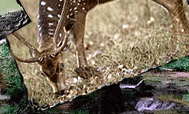
excellent variety of wild mammals; Nilgai (blue
bull), Sambar and Spotted Deer, Rhesus Macaque, Wild
Boar, Asiatic Jackal, Smooth Indian Otter and two
species of mongoose are all common, and this is one
of the few places in India where the rare Fishing
Cat may be seen. At night the howling of the Jackals
lends a chill to the warmest of evenings and a
variety of nocturnal creatures begin their foraging
including a number of Indian Porcupines. y Keoladeo Ghana National Park at Bharatpur is
arguably the finest bird sanctuary in the world.
Formerly a shooting preserve of the Rajput
Maharajahs of Bharatpur, it is just 29 sq. km. in
extent but holds a remarkable diversity of habitats.
The wetlands - marshes and flooded "jheels" - are
contained within acacia-lined "bunds", or
embankments, and irrigated by a system of canals and
sluices. Around them lie semi-arid grass and
scrubland and some excellent broad-leaved Kadam
woodland. Over 350 species of birds have been
recorded in the park and in five days we are likely
to see well over 100 of them. Amongst these will be
an unequalled array of wetland species, a great
variety of vultures, eagles and owls, plus numerous
small landbirds. As well as birds, the park has an
excellent variety of wild mammals; Nilgai (blue
bull), Sambar and Spotted Deer, Rhesus Macaque, Wild
Boar, Asiatic Jackal, Smooth Indian Otter and two
species of mongoose are all common, and this is one
of the few places in India where the rare Fishing
Cat may be seen. At night the howling of the Jackals
lends a chill to the warmest of evenings and a
variety of nocturnal creatures begin their foraging
including a number of Indian Porcupines. y |
|
Keoladeo Ghana
National Park is a stunning birdwatching locality
which ranks alongside the best in the world.
Amazingly compact, it provides the kind of spectacle
that almost defies description. The flooded jheels
ensure sheltered feeding and refuge for countless
thousands of geese, ducks, storks, herons and
waders. Many of the storks, herons and egrets begin
to nest during the monsoon rains which extend into
September and with a protracted breeding season it
is usual to see much activity around the tree-top
colonies until well into February. The only Crane to
nest at Bharatpur is the impressively huge Sarus,
long afforded protection in India as a sacred bird,
but their powerful trumpeting cries are not the only
crane calls to sound across the marshes as flocks of
Common Cranes take advantage of the reserve during
the winter months and are sometimes joined by a few
Demoiselle. The magnificent Siberian White Crane was
formerly a regular sight at Keoladeo but despite
being afforded complete protection during their
winter sojourn, these conspicuous birds have been
severely depleted by shooting during their long
migration and these days are only irregular
visitors. Favouring the edges of the wetlands, both
Pheasant-tailed and Bronze-winged Jacanas delicately
pick their way across the aquatic vegetation, Purple
Swamphens and White-breasted Waterhens are numerous
and other more secretive crakes may be encountered
by the fortunate observer. Pelicans are regular
visitors, both White and Dalmatian, often soaring in
thermals with great flocks of Painted Storks,
Open-billed Storks and raptors. Birds of Prey at
Bharatpur form another great attraction for
birdwatchers. A typical day walking around the
reserve will produce dozens of raptor sightings and
the range of species includes Spotted, Lesser
Spotted, Imperial, Steppe, Tawny and Bonelli's
Eagles with the possibility of also seeing wandering
White-tailed, Pallas's Fishing and even Golden
Eagles. More often to be seen sitting on a suitable
branch than flying, the Bharatpur eagles present
many identification headaches! |
|
 Moving away from the wetland habitat there is much
to see in the extensive kadum woodlands and the
acres of thorny acacia scrub. These are the haunts
of Dusky Eagle Owls, Spotted Owlets, Oriental Honey
Buzzard, Grey Hornbill, Coppersmith Barbets, Lesser
Goldenback Woodpeckers, Chestnut-bellied Nuthatch,
minivets, Common-Wood Shrikes and many other forest
birds including the elusive Spotted Creeper. During
the winter months, visitors from the Himalayas join
the resident species in these woodlands and it is
during this season that various flycatchers,
warblers and thrushes occur to add excitement to the
daily birding. The charismatic Siberian Rubythroat
is a regular visitor to the undergrowth in the Park
as are Olive-backed Pipits, Red-breasted
Flycatchers, several species of thrush and many
Bluethroats. Warbler afficionados have plenty to
search for with Clamorous Reed, Paddyfield, Blyth's
Reed, Yellow-browed, Moustached, Cetti's, Smoky and
Dusky Warblers all to be anticipated, albeit by no
means all easy to find! As well as the migrants, the
Reserve is also host to an impressive variety of
birds typical of northern India, a list which
includes; Grey Francolin, Red-wattled Lapwing,
Common Green Pigeon, Red Turtle Dove, Coucal, Pied,
White-breasted and Common Kingfishers, Indian
Roller, Hoopoe, Black Drongo, Pied and Common Mynas,
Tree-Pie, Red-vented and White-cheeked Bulbuls,
Jungle and Large Grey Babblers, Indian Robin, Magpie
Robin, Citrine and Large Pied Wagtails, Purple
Sunbird, Yellow-throated Petronia, Bay-backed and
Long-tailed Shrikes. Moving away from the wetland habitat there is much
to see in the extensive kadum woodlands and the
acres of thorny acacia scrub. These are the haunts
of Dusky Eagle Owls, Spotted Owlets, Oriental Honey
Buzzard, Grey Hornbill, Coppersmith Barbets, Lesser
Goldenback Woodpeckers, Chestnut-bellied Nuthatch,
minivets, Common-Wood Shrikes and many other forest
birds including the elusive Spotted Creeper. During
the winter months, visitors from the Himalayas join
the resident species in these woodlands and it is
during this season that various flycatchers,
warblers and thrushes occur to add excitement to the
daily birding. The charismatic Siberian Rubythroat
is a regular visitor to the undergrowth in the Park
as are Olive-backed Pipits, Red-breasted
Flycatchers, several species of thrush and many
Bluethroats. Warbler afficionados have plenty to
search for with Clamorous Reed, Paddyfield, Blyth's
Reed, Yellow-browed, Moustached, Cetti's, Smoky and
Dusky Warblers all to be anticipated, albeit by no
means all easy to find! As well as the migrants, the
Reserve is also host to an impressive variety of
birds typical of northern India, a list which
includes; Grey Francolin, Red-wattled Lapwing,
Common Green Pigeon, Red Turtle Dove, Coucal, Pied,
White-breasted and Common Kingfishers, Indian
Roller, Hoopoe, Black Drongo, Pied and Common Mynas,
Tree-Pie, Red-vented and White-cheeked Bulbuls,
Jungle and Large Grey Babblers, Indian Robin, Magpie
Robin, Citrine and Large Pied Wagtails, Purple
Sunbird, Yellow-throated Petronia, Bay-backed and
Long-tailed Shrikes.
|
|
Yet more awaits in the
more isolated arid corners of the Reserve. It is
here that one or two introduced Blackbuck may be
found but of ornithological interest are occasional
appearances by Sociable Lapwing, Indian Coursers and
other dry-country birds. |
|
During our stay we
will also visit the Chambal River (a 70 kilometres
drive) and Bund Baretha - a large reservoir situated
30 kilometres from Bharatpur. |
|
 The River Chambal is
one of the country’s most beautiful and least
polluted river systems. The National Chambal
Sanctuary was formed to protect this pristine river
ecosystem, complete with its varied flora, aquatic
life and avifauna. The Chambal River, which is the
mainstay for the entire wildlife of the sanctuary,
harbours a variety of aquatic life such as the
elusive, and endangered, Gangetic Dolphin, Marsh
Crocodile, Gharial or Fish Eating Crocodile,
Freshwater Turtles, River Otters and a various
species of fish. The surrounding environs of the
river are a true bird watcher’s delight offering the
chance to add several species not found at Bharatpur
such as Indian River and Black-bellied Terns, Great
Black-headed Gull and the bizarre Indian Skimmer,
often to be found resting on sand-bars in mid-river.
Passerines here can include Common Babbler, Tawny
Pipit, Sand, Short-toed, Crested and Rufous-tailed
Larks. The River Chambal is
one of the country’s most beautiful and least
polluted river systems. The National Chambal
Sanctuary was formed to protect this pristine river
ecosystem, complete with its varied flora, aquatic
life and avifauna. The Chambal River, which is the
mainstay for the entire wildlife of the sanctuary,
harbours a variety of aquatic life such as the
elusive, and endangered, Gangetic Dolphin, Marsh
Crocodile, Gharial or Fish Eating Crocodile,
Freshwater Turtles, River Otters and a various
species of fish. The surrounding environs of the
river are a true bird watcher’s delight offering the
chance to add several species not found at Bharatpur
such as Indian River and Black-bellied Terns, Great
Black-headed Gull and the bizarre Indian Skimmer,
often to be found resting on sand-bars in mid-river.
Passerines here can include Common Babbler, Tawny
Pipit, Sand, Short-toed, Crested and Rufous-tailed
Larks. |
|
Bund Baretha is a
large reservoir which is also noted as a good
location to find Indian Skimmer and other waterbirds.
The surrounding arid countryside is worth checking
for sandgrouse, Indian Coursers, Yellow-wattled
Lapwing, Eastern Pied, Isabelline and Desert
Wheatears along with a number of prinia species to
test identification skills. |
|
Bharatpur is fulfilment of an ornithological dream
and even with the time at our disposal there is
always so much more to do and see in this wonderful
wildlife sanctuary. |
|
DAY 8
AGRA & DELHI
 A day of sightseeing in Agra begins with a visit to
the deserted ruins of Fatehpur Sikri, once the
capital of the Mogul Empire, which is situated
roughly half way between Bharatpur and Agra City.
Dusky Crag Martins skim over the red sandstone walls
of this ancient place and although the accent is on
history during our visit, birds are always on hand
for those members of the party with less interest in
the events of the past. Hoopoes, Brown Rock Chats
and possibly a Blue Rock Thrush might be seen as we
walk around and clouds of Black Kites and vultures
circle overhead, the latter likely to include
several Long-billed. On occasions wintering
Wallcreepers find the numerous rocky crevices worthy
of investigation and if we are really lucky we may
come upon one of the resident Eagle Owls. A day of sightseeing in Agra begins with a visit to
the deserted ruins of Fatehpur Sikri, once the
capital of the Mogul Empire, which is situated
roughly half way between Bharatpur and Agra City.
Dusky Crag Martins skim over the red sandstone walls
of this ancient place and although the accent is on
history during our visit, birds are always on hand
for those members of the party with less interest in
the events of the past. Hoopoes, Brown Rock Chats
and possibly a Blue Rock Thrush might be seen as we
walk around and clouds of Black Kites and vultures
circle overhead, the latter likely to include
several Long-billed. On occasions wintering
Wallcreepers find the numerous rocky crevices worthy
of investigation and if we are really lucky we may
come upon one of the resident Eagle Owls. |
|
About one hour from
Fatehpur Sikri we enter the historic city of Agra
and enjoy a guided sightseeing tour of the Taj Mahal
and the Red Fort but these world-famous buildings
are not without ornithological interest for those
reluctant to abandon birding. The Yamuna River here
is always populated by flocks of waders and the
 skies filled with Black Kites. Possibilities include
Ruddy Shelduck, River Lapwing, Avocet, Marsh
Sandpiper, River and Black-bellied Terns, Great
Black-headed and Brown-headed Gulls, Lagger Falcon
and Spotted Owlet. The quieter corners of the Taj
gardens might reveal barbets, Grey Hornbills and
perhaps a few warblers. Omnipresent at every site
are the chittering, inquisitive little Palm
Squirrels and a fine mixture of colourful
butterflies. Today though the birds take second
place to the magnificent buildings and prime among
these is the breathtakingly beautiful white marble
monument of the Taj Mahal, one of the best known
images of India but never a disappointment in real
life. skies filled with Black Kites. Possibilities include
Ruddy Shelduck, River Lapwing, Avocet, Marsh
Sandpiper, River and Black-bellied Terns, Great
Black-headed and Brown-headed Gulls, Lagger Falcon
and Spotted Owlet. The quieter corners of the Taj
gardens might reveal barbets, Grey Hornbills and
perhaps a few warblers. Omnipresent at every site
are the chittering, inquisitive little Palm
Squirrels and a fine mixture of colourful
butterflies. Today though the birds take second
place to the magnificent buildings and prime among
these is the breathtakingly beautiful white marble
monument of the Taj Mahal, one of the best known
images of India but never a disappointment in real
life. |
|
In the evening we will
take our train to Delhi (a 3-hour journey). Here we
will be transferred to hotel for night stay. |
|
DAY 9
HOME
Full day free for last minute shopping. In the late
evening transfer to International airport to catch
flight for home.........................Tour end
with happy memory. |
|
|
Top |
| |
|